Allocation Intelligence: A Guide for Treasuries, Foundations, and Institutional Allocators
Reading Time - 7 min

In a maturing staking market, set-and-forget is no longer a viable strategy. It leads to yield leakage, unmanaged risk, and a failure to support network health.
Polli provides the infrastructure to move from passive participation to a continuously managed allocation strategy.
Here is how institutions, foundations, and professional allocators deploy systematic intelligence using Polli.
What is Polli?
Polli is the allocation intelligence layer for institutional digital assets. We provide a non-custodial operating framework that evaluates, routes, and optimizes capital across crypto staking.
Rather than a simple staking service, Polli translates your allocation policy into continuous execution. It operates in the background, dynamically rebalancing capital across validators as conditions change. Your capital always reflects your mandate, not last quarter’s decisions.
Polli supports staking across multiple networks, including Cosmos Hub (ATOM), Lava Network (LAVA and Osmosis (OSMO).
Who Polli is Built For
Polli caters to institutions that hold significant on-chain capital.
- Foundations: To align large native token positions with network health and decentralization mandates.
- Protocols: Decentralized applications and bodies that actively deploy staked funds but have no systemic framework for improving their impact.
- Treasuries: For teams that need capital to perform with institutional-grade rigor without adding operational overhead.
- Professional Allocators: For those who require systematic tools to manage risk-adjusted returns across the staking landscape.
The Deployment Workflow
1. Connect via Non-Custodial Architecture
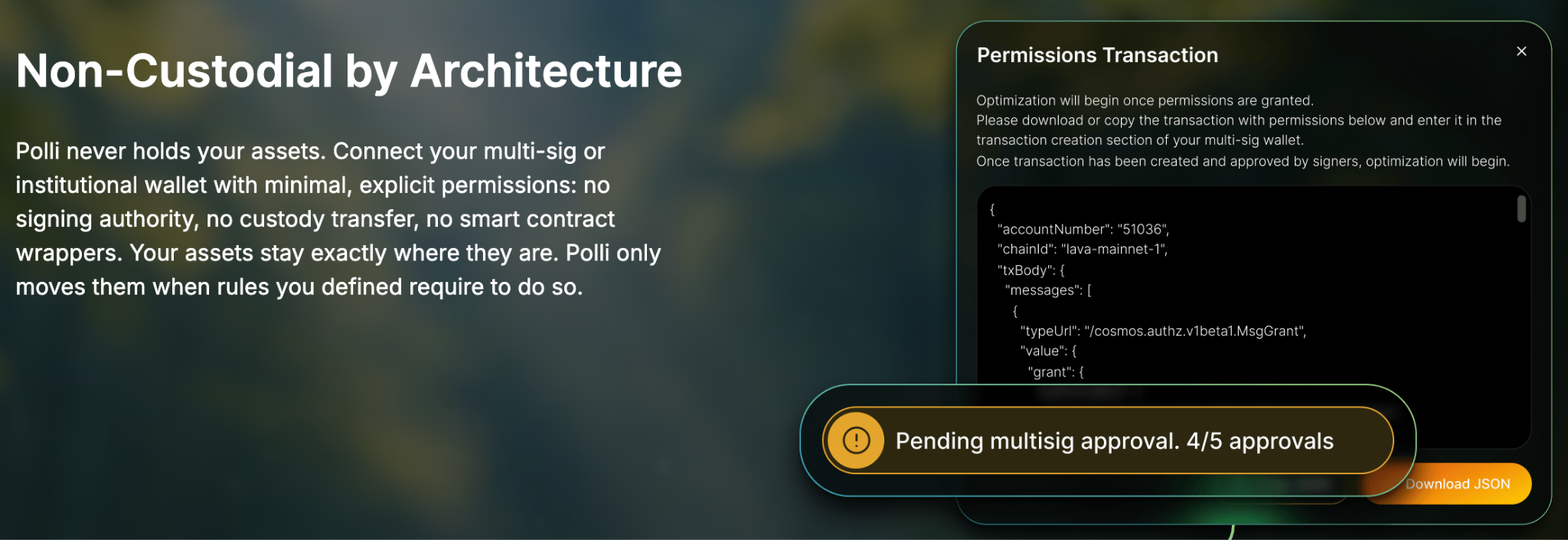
Launch the Polli App and connect using a multi-sig or institutional-grade wallet.
Polli never takes custody. The architecture is built on the principle that control must remain with the capital owner. Polli receives permission only to route and optimize, never to hold.
2. Define Your Allocation Policy
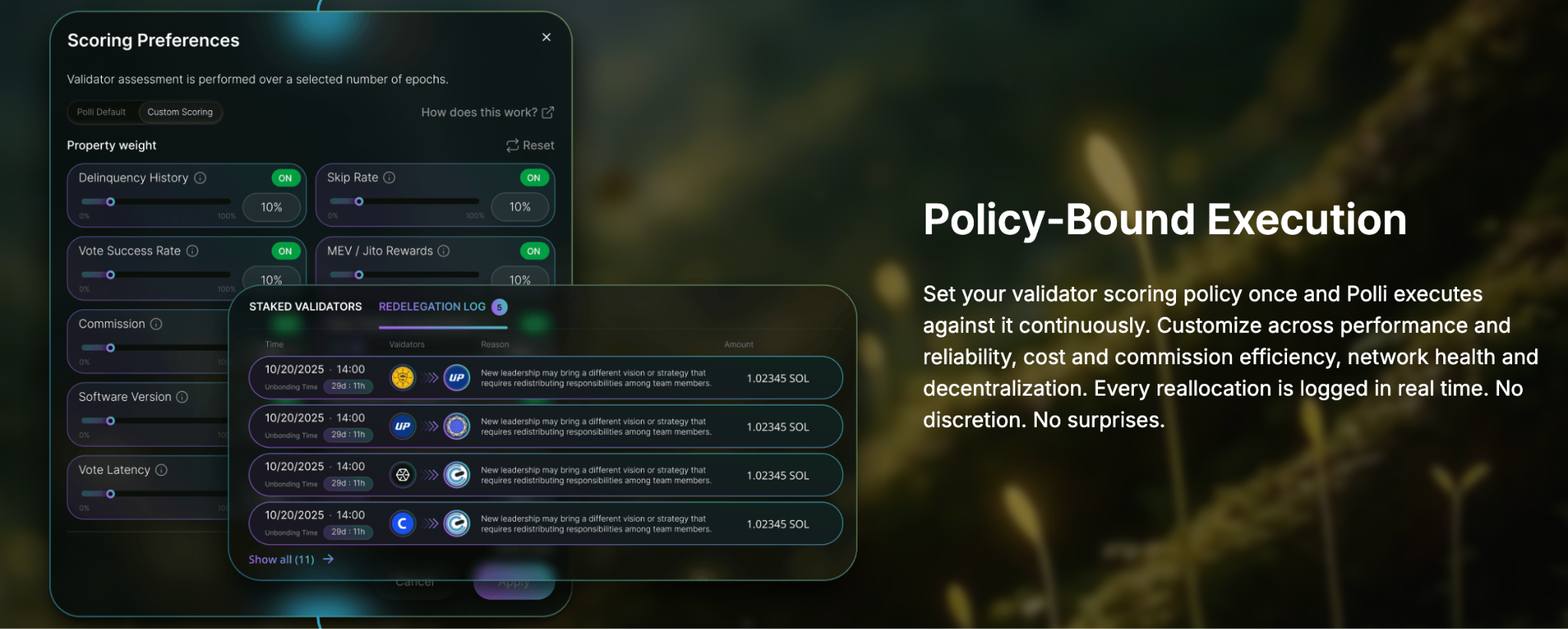
Institutional allocation starts with intent. Before deploying, foundations and treasuries define their parameters.
Polli’s framework allows you to balance:
- Yield Optimization: Targeting the most efficient reward capture from low commissions to MEV yield capture.
- Decentralization Targets: Routing stake to high-performing, medium-sized operators to prevent superminority concentration.
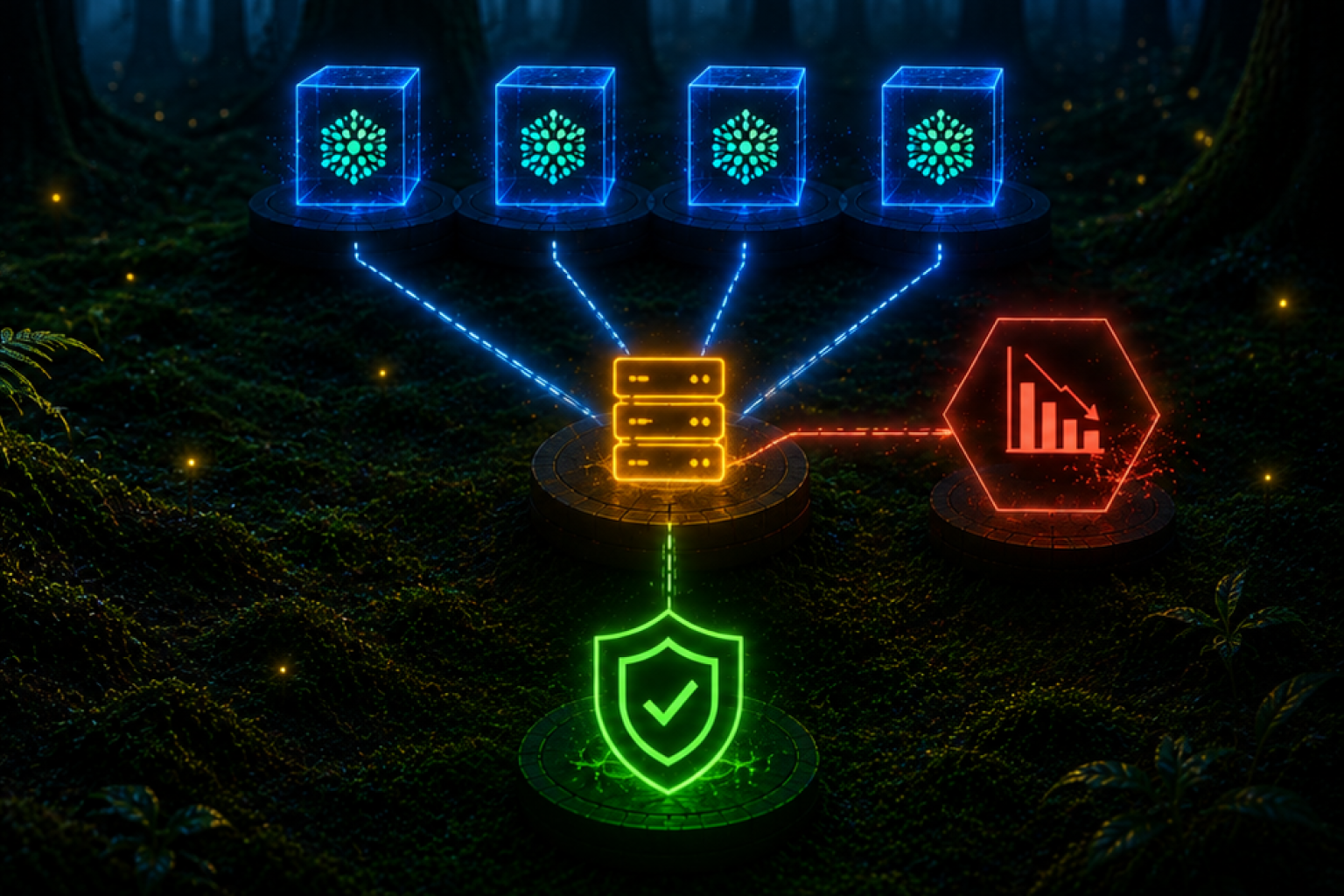
- Risk Thresholds: Real-time monitoring of validator signatures of failure to trigger defensive rebalancing.
Instead of manually selecting a single validator, you are deploying a Policy-Driven Program. Polli prepares an optimized distribution based on real-time telemetry, ensuring your stake votes for network quality and performance.
3. Continuous Monitoring and Automated Rebalancing
Once deployed, the strategy is always on.
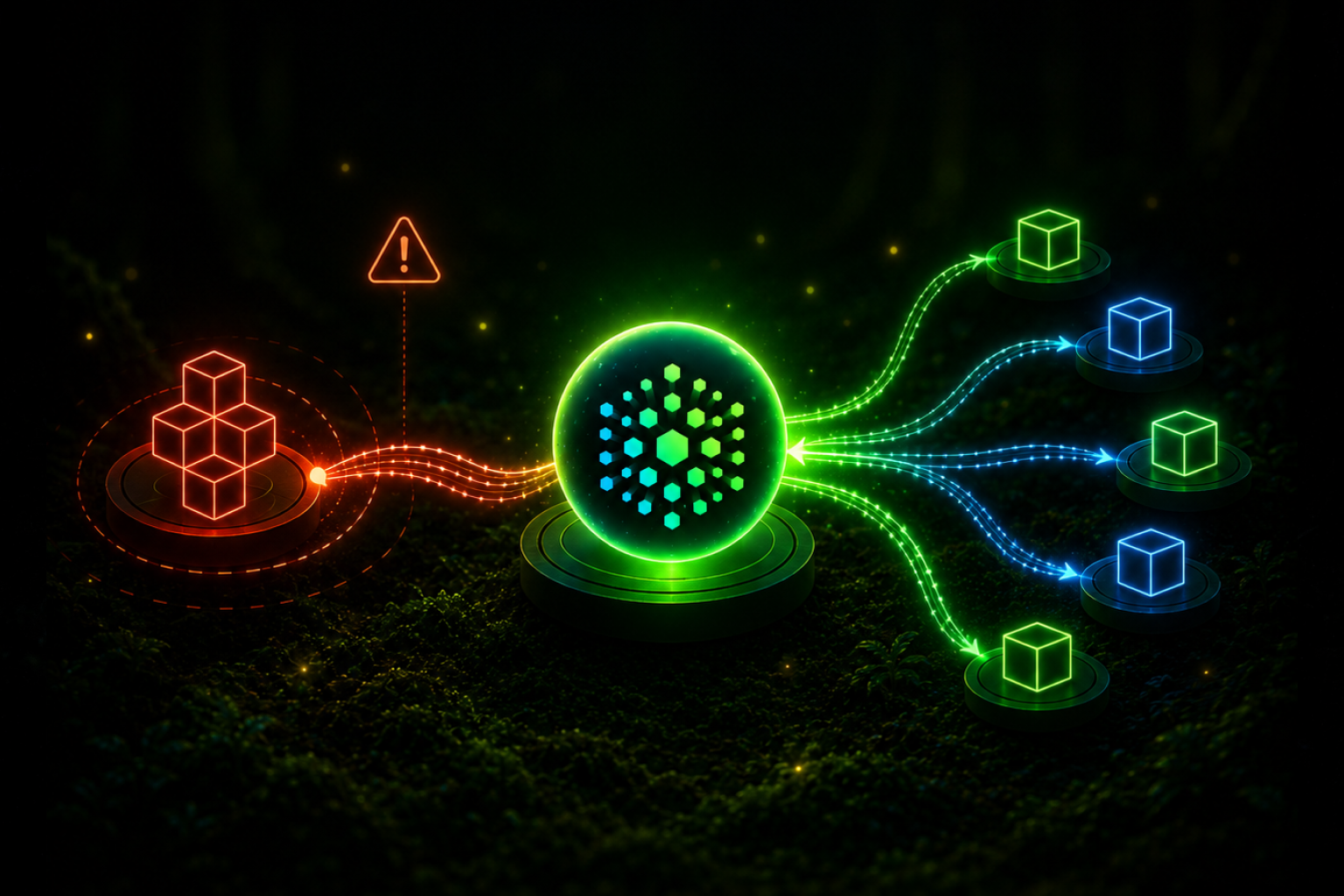
Rewards are reinvested at the optimal frequency. If a validator’s performance drifts, commissions rise, or security risks emerge, Polli triggers an automated rebalance to a superior position.
Start Staking With Polli
The set-and-forget era of staking was a necessary bridge, but it is no longer sufficient for the scale of capital now entering the industry. For foundations, treasuries, and professional allocators, the cost of static capital is a tax that can no longer be ignored.
Polli exists to close the gap between institutional assets and the networks they power.
By providing a dedicated allocation intelligence layer, we move beyond basic infrastructure to offer a continuous, policy-driven management engine. Digital assets evolve from dormant balance sheet items into high-performance, resilient strategies.
In the next phase of crypto, the competitive edge will not be found in simply holding assets, but in the intelligence used to route them. Polli ensures that your capital is always performing, always secure, and always contributing to the health of the decentralized economy.
FAQs
Is Polli Safe?
Yes. Polli is a non-custodial platform, meaning we never take control of your assets. Your funds remain in your wallet and under your sole ownership at all times.
Most importantly: Polli will never ask for your private keys or seed phrase. You retain 100% control of your security, significantly reducing counterparty risk and ensuring complete transparency.
How Much Does It Cost to Use Polli?
Polli wins when you win. Polli charges a commission only if the platform generates returns that exceed the standard network APR. This commission is a portion of that “over-performance” (the extra profit generated for you). If Polli doesn’t beat the market, you don’t pay a commission. Please note that standard network gas and transaction fees still apply.
What is a Redelegation?
Redelegation allows you to move your staked tokens from one validator to another instantly, without having to wait for the standard unbonding period.
Why do Redelegations Happen?
Polli’s AI continuously monitors the network’s health and performance to ensure your assets are always in the best possible position. Redelegations are triggered automatically for several key reasons:
- Maximizing Yield: If another reputable validator offers a lower commission or higher performance, Polli may move your stake to capture that better return.
- Validator Health & Uptime: If your current validator goes offline or has “downtime,” they stop earning rewards. Polli detects this immediately and moves your assets to an active validator so you don’t miss a single block of rewards.
- Risk Mitigation: If a validator fails to meet network standards, and is in risk of “slashing” (a penalty where a portion of staked tokens is lost). Polli monitors these risk signals and redelegates your funds away from “at-risk” validators to protect your principal.
Which networks does Polli support?
We currently support allocation intelligence services for ATOM, LAVA, KiiChain, SCRT, and OSMO. Our team is actively working to integrate more ecosystems, so keep an eye out for upcoming network launches.

January 27, 2026
May 25, 2026