
The Allocation Layer: Crypto’s Final Infrastructure Frontier
Reading Time - 10 min

Crypto has moved past the era of Creation and Deployment.
We no longer ask if blockchains can store value or if capital can be put to work. Those questions have been answered.
We are entering a new phase. And the defining question of this era changes.
It is no longer about whether capital can be deployed, but whether it can be deployed intelligently, at an institutional scale, with the precision and discipline that this market now demands.
The current answer is “no.” And the gap between what exists and what is required is one of the most significant opportunities in the industry.
The Infrastructure Hierarchy Nobody Talks About
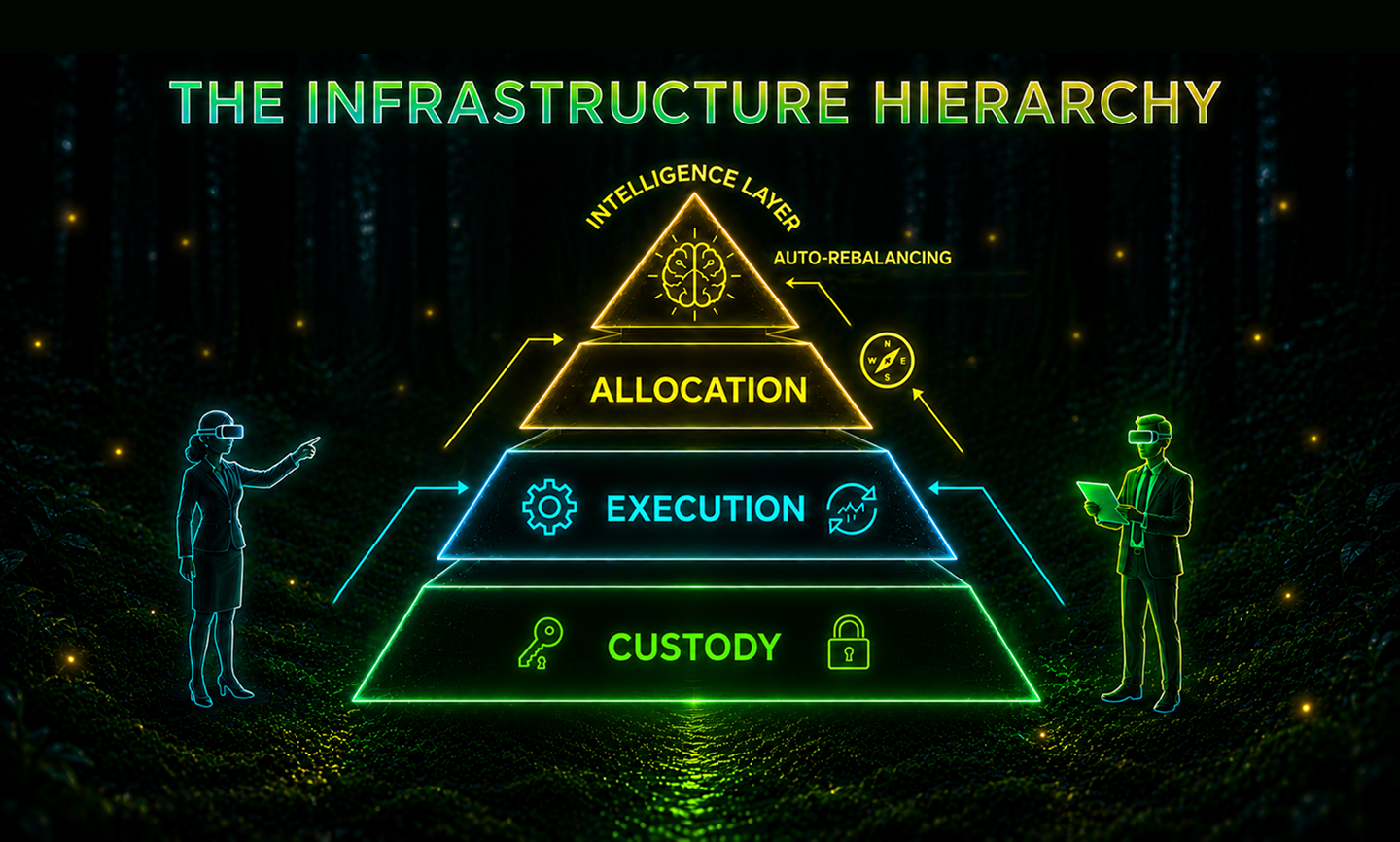
Every major asset class in traditional finance rests on a layered infrastructure stack.
- Custody: the ability to hold assets securely.
- Execution: the ability to transact.
- Allocation: the ability to continuously route capital toward its most productive use based on real-time conditions, risk parameters, and institutional objectives.
Traditional finance spent decades building this hierarchy.
Custody and execution were addressed first. But the allocation layer, in the form of systematic portfolio management and active rebalancing, proved the most valuable of all. The firms that built it well compounded their advantages, making them nearly impossible to close.
Crypto has built the first two layers reasonably well. But the third layer, the allocation layer, has barely been started.
What exists today are approximations: dashboards that display data without acting on it, and staking services that handle execution but apply zero ongoing intelligence.
Why the Window Is Narrowing
The conditions creating the allocation problem are accelerating, not stabilizing.
In our article on the Allocation Problem, a conservative 2% allocation inefficiency in the current staking market amounts to $12 billion in annual lost productivity. But staking markets are on a trajectory toward a multi-trillion-dollar scale.
Should Bitcoin approach $1 million by 2030, the broader market capitalization scales accordingly. The total value of staked assets could reach $4 to $5 trillion.
At that scale, the same inefficiency represents $80 to $100 billion annually.
The complexity is also compounding.
Restaking Dynamics
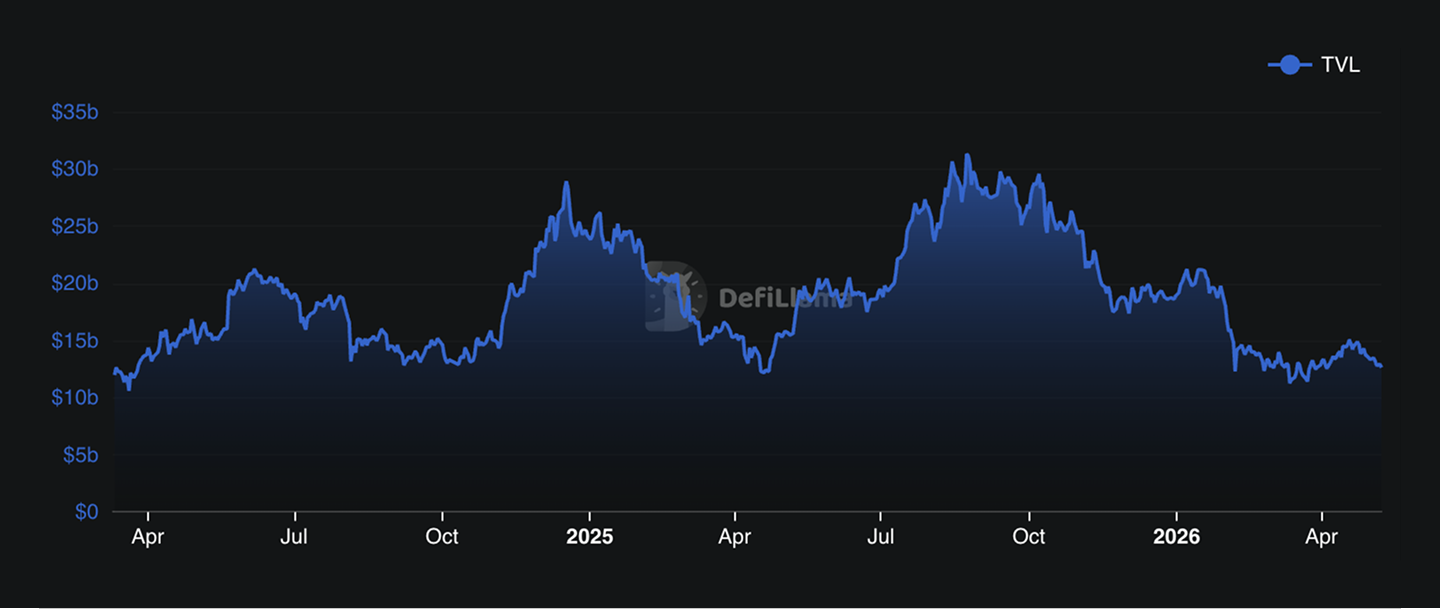
According to DeFiLlama data as of May 2026, the restaking industry has $12.6 billion in total value locked.
EigenLayer (for Ethereum) and Babylon (for Bitcoin) are creating allocation decisions that compound across multiple security layers simultaneously.
RWAs On-Chain
Real-world assets (RWAs) are tangible or intangible physical-world assets, such as real estate, gold and bonds, that are converted into digital tokens on a blockchain. They are one of the biggest crypto categories to take off.
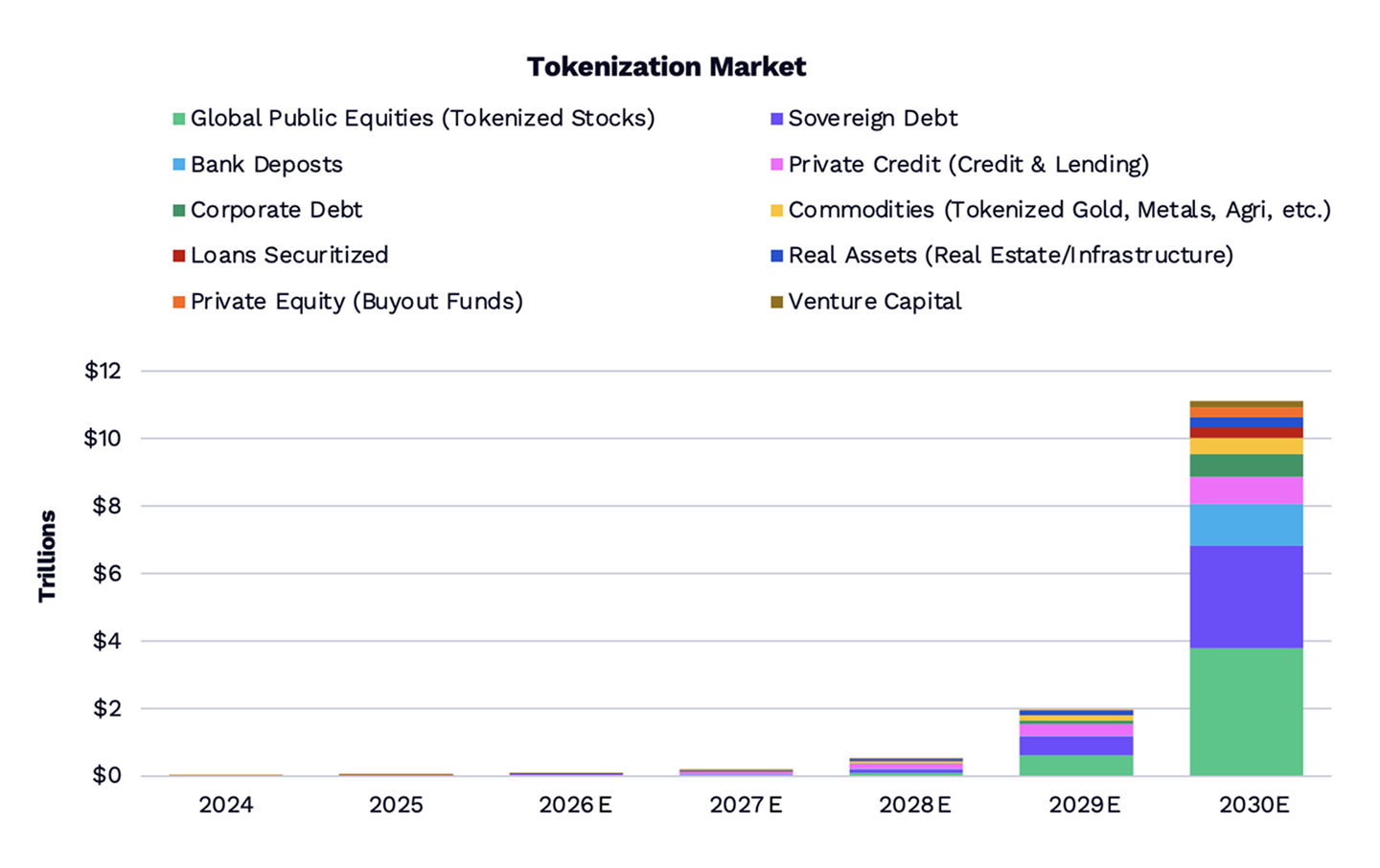
In January 2026, Ark Invest released its Big Ideas report, outlining how the RWA market could reach $11 trillion by 2030.
RWAs introduce an entirely new layer of regulatory and compliance standards that must be met with the rigor of institutional finance.
Fiduciary Collapse
When pension funds and sovereign wealth vehicles treat staking as a standard treasury activity, the tolerance for four-to six-month manual re-delegation cycles will collapse.
These institutions operate with reporting obligations, fiduciary standards, and operational requirements that are simply incompatible with how crypto capital management works today.
The window to build allocation infrastructure before it becomes table stakes is not indefinitely open. The market is moving toward a structure where the absence of systematic allocation frameworks will be as conspicuous as the absence of a custody solution.
The Compounding Advantage of Moving First
In most infrastructure markets, the first credible solution sets the standard against which everything that follows gets evaluated. Crypto has already seen this play out.
When Anchorage Digital received its OCC charter in January 2021, the consensus was that crypto and federal oversight were like oil and water. They moved anyway.
Four years later, that early bet had compounded into an institutional moat: Anchorage was named staking partner and exclusive qualified custodian for the first SEC-registered staking ETF in the U.S.
The institutions that needed a compliant counterparty went to the one that had already done the work.
Polli is making the same kind of early move, one layer up. The Lava Foundation is already running on Polli’s allocation infrastructure. What that partnership demonstrates in practice:
- Data: Validator performance is continuously evaluated, with delegations adjusting in real time rather than waiting on manual review cycles
- Intelligence: Allocation decisions now respond dynamically to performance signals across the validator set
- Execution: What previously required running scripts, reviewing performance, and executing transactions by hand is now automated and scalable
By the time allocation infrastructure becomes table stakes, the gap between early builders and late starters will be significant. In institutional finance, advantages of this kind have historically taken a decade or more to close. Polli is not waiting for that moment. It is building the standard now.
What the Third Phase Actually Requires
The firms that defined the second phase won by being the fastest and most reliable at execution.
The firms that define the third phase will win by being the most intelligent and systematic at allocation. They will also win by aligning with the objectives of institutional capital, which are never simply yield maximization. They are risk-adjusted returns, network health contribution, regulatory defensibility, and operational efficiency running simultaneously.
This requires a specification that looks less like a crypto product and more like a genuine institutional infrastructure layer:
- Continuous Telemetry: Real-time data systems indexing every block.
- Multi-Objective Models: Balancing risk-adjusted returns, network health, and regulatory defensibility.
- Non-Custodial Architecture: Policy-driven execution that operates without manual intervention or ceding control of assets.
And then there’s full on-chain auditability at every step.
Institutional capital in a regulated environment requires the ability to explain every decision to a compliance officer, a board, or a regulator.
None of the tools available today was built to meet that specification. They were built for a market that is already changing.
How Polli Is Building the Third Layer
Polli is not preparing to build allocation infrastructure. It is already running.
The Lava Foundation and KII Foundation are already live. What they have access to is what the broader market is still waiting for:
- Non-custodial by architecture — Polli never holds assets. Multi-sig compatible, auditable on-chain, with no signing authority or custody transfer required. The custody structure never changes.
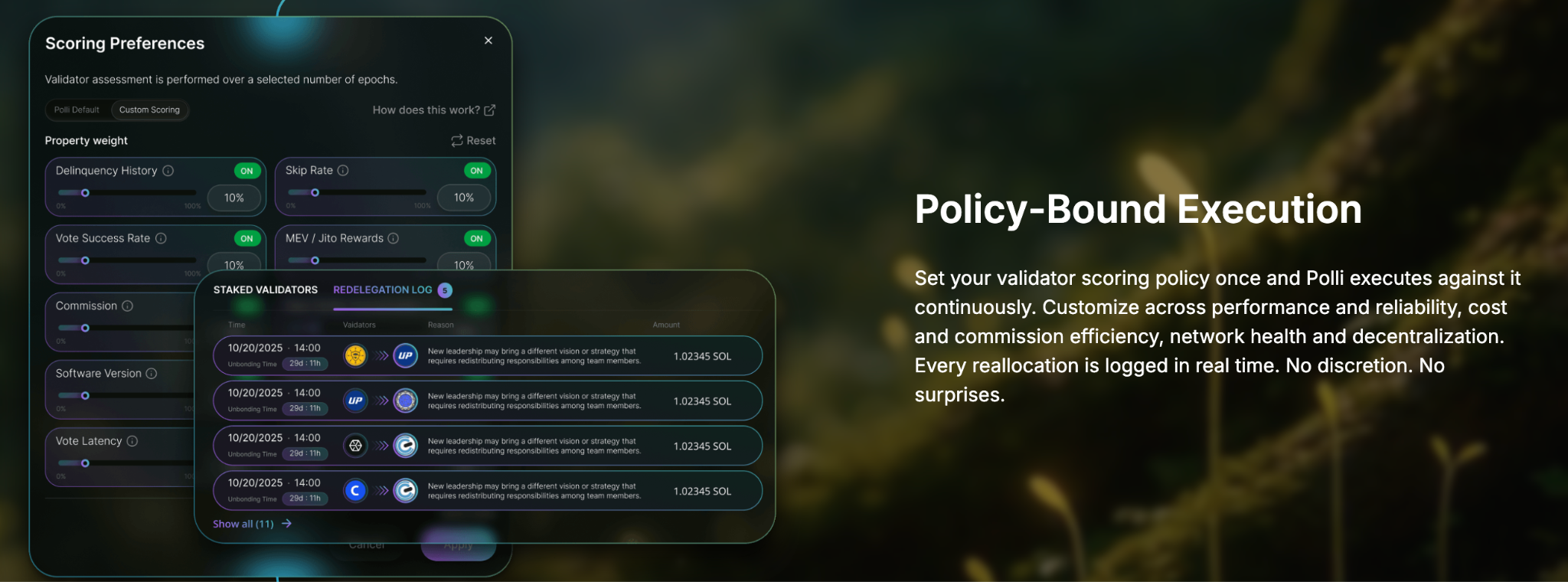
- Policy-bound execution — Validator scoring policy is set once and executed continuously across performance, commission efficiency, and network health. Every reallocation is logged in real time. No discretion. No surprises.
- Always-on rebalancing — Continuous monitoring, rebalancing, and reward compounding running every hour the team is not. Capital always reflects the current mandate, not last quarter’s decisions.
This is what separates allocation intelligence from a dashboard. A dashboard reports. Polli executes.
The institutions that plug into this infrastructure now will not just perform better. They will compound a data and execution advantage that late movers will spend years trying to close.
Polli Is Building What Crypto Needs Next
The productive capital system in crypto is sophisticated and ready for its next layer. Polli is building that layer: the allocation intelligence infrastructure for crypto capital.
The window to move first is open now. The standard will be set by whoever builds it first, and that standard will be extraordinarily difficult to displace.
Polli is already live across Lava, Solana, Cosmos, and Babylon. The infrastructure is not theoretical. The third phase of crypto has a defining infrastructure requirement, and Polli is already executing on it.

May 25, 2026
May 25, 2026